What challenges did the bank face and why was this critical?
The bank experienced a sharp escalation in Authorised Push Payment (APP) fraud leveraging remote desktop tools. Customers were pressured by individuals posing as bank representatives or technical support, while remote desktop tools were activated, enabling attackers to progressively gain control of the user’s device.
From the bank's perspective, the session appeared entirely legitimate – creating a critical 'blind spot' where user manipulation occurred at the device level, outside network visibility. However, the abuse occurred outside the bank's infrastructure, on the client's device-after logging in, during a legitimate session.
The bank often learned about the fraud only after the fact because systems did not see clear anomalies. Despite existing session takeover detection mechanisms, their effectiveness was inconsistent (differences between Windows/macOS and various remote access tools).
As a result, the fraud team often knew "something was wrong" but lacked a definitive signal to make a decision with full confidence. This led to delayed reactions, "just in case" escalations, and a growing number of manual verifications. Operational costs rose, and the risk of blocking legitimate customers became real.
What was implemented and how did it work in practice?
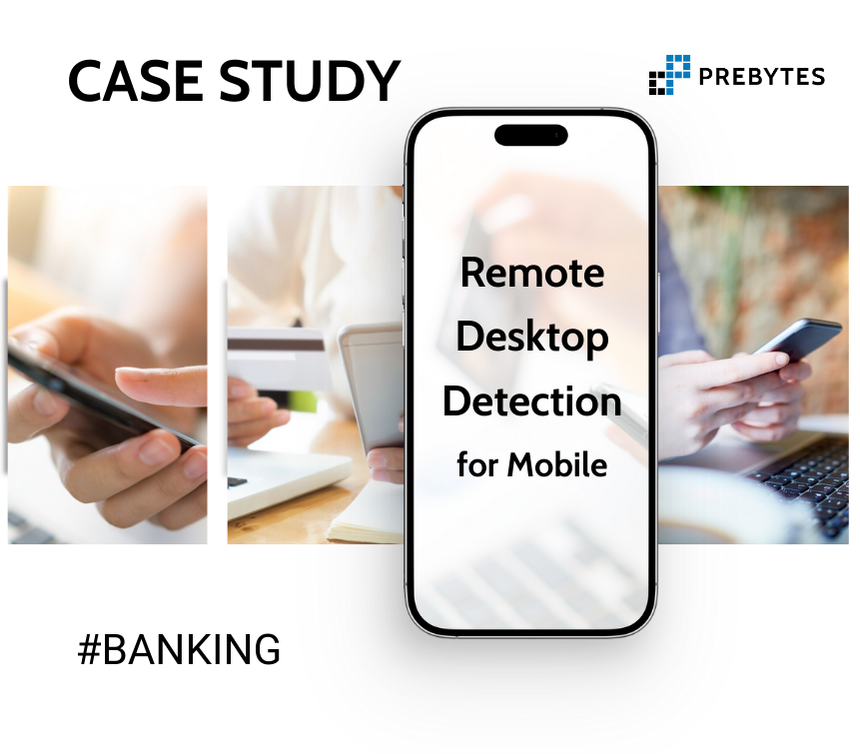
The bank decided to deploy Remote Desktop Detection for Web as a high-precision signal to complement its existing anti-fraud stack.
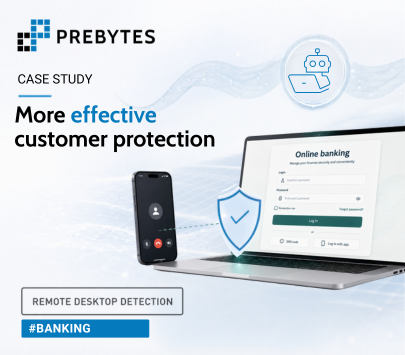
The solution detected the presence of a remote desktop and, most importantly, the moment of actual takeover of the user's session. It operated in real-time and independently of the operating system, covering both Windows, macOS and mobile browsers.
Where the signal was utilized:
- On the login page,
- Before high-risk transactions,
- During critical session actions.
The decision on where to use the signal was flexible and tailored to the bank's policy.
The detection was effective from day one after deployment, leveraging multiple technical mechanisms (Active/Passive) without requiring weeks of user profile training. Built strictly on privacy-by-design principles (aligned with UK & EU GDPR), the solution operates without capturing PII or biometric data, significantly accelerating internal compliance sign-offs.
From an integration standpoint, the solution required minimal involvement from the bank’s IT team. One line of JavaScript. No architectural changes. No changes to existing anti-fraud systems. PREBYTES managed testing, updates, and maintenance-reducing the ongoing workload for the bank’s team.
The solution did not replace existing tools-it strengthened them with a precise signal.
How did the bank use the signal?
Depending on the risk level, the bank could automatically log out the user, raise the risk score, or provide a clear, understandable signal to the fraud team. This was not another generic alert, but specific information on why a given session was risky.
As a result, decisions were no longer based on guesswork.
Results and day-to-day impact
The first effects were visible very quickly, but the biggest change occurred in the daily work of the fraud team.
The team stopped guessing and reacting after the fact. Real-time decision certainty brought consistency across the organization, significantly reducing manual reviews and eliminating unnecessary blocks for legitimate users.
From the customer’s point of view, the security controls were entirely transparent. The digital banking experience remained uninterrupted, requiring no additional installations or consent, while overall security was significantly enhanced without impacting UX.
Post-implementation results:
- 97% drop in the number of confirmed remote access scams in the web channel (vs. the pre-implementation period)
- Drastic reduction in Fraud Operations workload – high-confidence risk signals eliminated 'just-in-case' account freezes and reduced FTE hours spent on manual reviews.
- No unnecessary blocking of legitimate users (decrease in false positives / "just in case" escalations)
- No impact on UX or banking performance
- ROI achieved within 3 months
Do you have any questions after reading the case study? Contact us.